.png)

AI-Powered Freight: How Smart Tech Is Rapidly Reshaping the Transport Industry
Updated: Jul 11, 2025
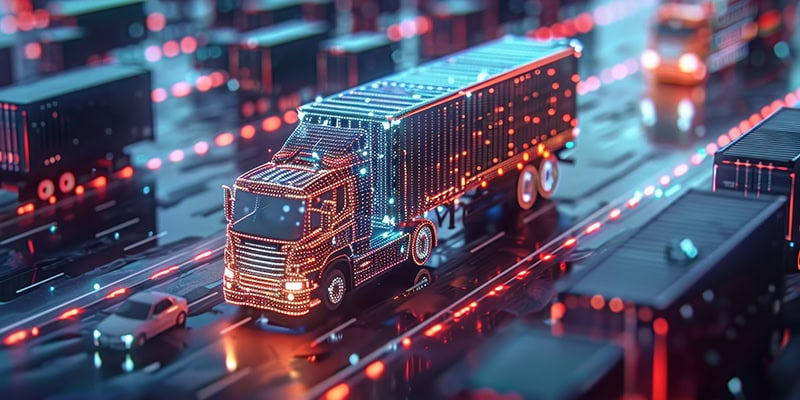
The road freight industry is entering a period of significant transformation — driven by the rapid advancement of Artificial Intelligence (AI) in Transport Management Systems (TMS). For many operators, this marks a move beyond digitisation and into a new era of intelligent automation, real-time insights, and proactive fleet control.
AI Is Reshaping the Core of Fleet Operations
Transport providers have long sought ways to improve visibility, streamline operations, and reduce cost per kilometre. The emergence of AI-powered Transport Management systems are accelerating this ambition — enabling smarter route planning, predictive maintenance, driver behaviour analysis, and automated compliance tracking.
By learning from operational data in real time, these systems can recommend more efficient dispatch decisions, reduce idle time, and flag emerging risks before they escalate. For fleet managers, that means less time reacting and more time focusing on strategic improvement.
The Compliance Advantage
Regulatory compliance remains a major pressure point for Australian and New Zealand operators. From fatigue management to mass and maintenance records, AI is making it easier to remain compliant without creating additional admin burden.
Leading Transport Management Systems are now able to automate alerting around driver hours, equipment servicing, or expired documents — and provide a digital audit trail that stands up to regulator scrutiny. The result? Better governance, with less paperwork.
Tailored Solutions for ANZ Transport Providers
While many global Transport Management Systems offer AI modules, the most effective solutions are those designed with local requirements in mind — including NHVR regulations, HVNL fatigue rules, and regional integration preferences.
One example is the growing trend toward modular, cloud-based platforms that integrate seamlessly with accounting, payroll, telematics, and camera systems. These systems provide operators with a single view of their operations, without locking them into rigid or over-engineered frameworks.
Sustainability as a Byproduct of Smart Optimisation
There’s also a compelling sustainability angle. By optimising route efficiency, reducing empty kilometres, and improving asset utilisation, AI-enabled systems are contributing to lower emissions and reduced fuel consumption — aligning with both internal ESG goals and external stakeholder expectations.
As regulatory pressure around environmental performance increases, AI-supported Transport Management Systems are helping operators stay ahead of the curve.
AI is no longer a futuristic concept — it’s now shaping daily decisions in transport businesses across ANZ. And while the technology is evolving quickly, its most powerful impact often comes through practical, incremental improvements delivered at the operational level.
For providers looking to modernise, improve compliance, and gain control over cost and risk, adopting a more intelligent TMS approach is becoming less of an option — and more of a necessity.
Slipstream Clear is a modular, AI-enabled Transport Management System developed in Australia to support the evolving needs of local road freight operators. To learn more, visit www.slipstream.app.


Comments